
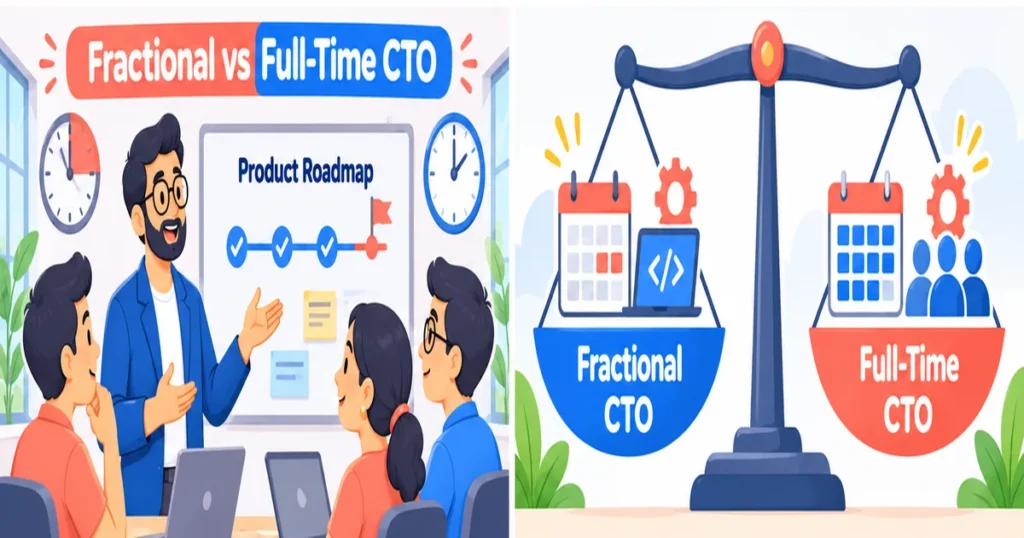
The choice between a fractional CTO and a full-time CTO comes down to how much technology leadership your startup needs right now, and how much it can afford to commit. A fractional CTO is an experienced technology leader who works with you part-time or on a defined engagement, guiding strategy, architecture and hiring without a full-time salary. A full-time CTO is a permanent executive who owns technology every day and is often a long-term partner in the company. Most early-stage startups need judgement more than hours, which is why the fractional route is usually the right place to start. This guide explains how each option works and how to tell when it is time to switch.
What a CTO actually does in a startup
Before comparing the two models, it helps to be clear about the job. In a startup, the Chief Technology Officer is responsible for the technology decisions the business will live with for years. That usually includes:
- Turning the product idea into a realistic technical plan and first release
- Choosing the technology stack, architecture and hosting approach
- Hiring and leading developers, or selecting and managing outside vendors
- Balancing speed against quality, security and future scale
- Explaining technology risks and costs to founders, investors and customers
Some of these tasks need constant attention. Others are big decisions made occasionally. That difference is the key to choosing the right model.
What is a fractional CTO?
A fractional CTO provides senior technology leadership for part of the week, part of the month or a specific project. You may also see the role called a virtual CTO, part-time CTO or CTO-as-a-service. The engagement can take several forms: a few days a month of ongoing guidance, a set number of hours each week, or a focused project such as planning an MVP, reviewing an architecture or choosing a development partner.
The fractional CTO brings experience across many products and teams. Because they have seen similar decisions play out before, they can often spot an expensive mistake early, such as building features before validating demand or choosing a stack nobody on the team can maintain. What they do not provide is daily, hands-on presence inside your company. BlinkWorx offers this kind of part-time leadership through its virtual CTO and technology consulting service.
What a full-time CTO brings
A full-time CTO is part of the leadership team every day. They build and manage the engineering team, make technical calls as they come up, and carry long-term responsibility for the product. In many startups the CTO is also a co-founder with equity, which ties their success directly to the company’s.
That commitment is the main advantage. A full-time CTO knows the codebase, the team and the customers deeply, and can respond to problems immediately. The trade-off is cost and risk: senior technology leaders are expensive to hire, the search can take months, and hiring the wrong person at this level is costly to reverse.
Fractional CTO vs full-time CTO: side-by-side comparison
| Factor | Fractional CTO | Full-time CTO |
|---|---|---|
| Time commitment | Part-time or project-based | Full-time, every day |
| Cost | Paid for the time or scope you use | Senior salary, often plus equity |
| Speed to start | Usually weeks | Often months to find the right person |
| Breadth of experience | Sees many products and industries | Deep focus on one product |
| Day-to-day availability | Limited to agreed hours | Available for daily decisions |
| Team leadership | Guides and sets direction | Builds and manages the team directly |
| Long-term ownership | Advisory, with a clear handover | Owns technology as the company grows |
| Flexibility | Easy to scale up, down or end | A long-term executive commitment |
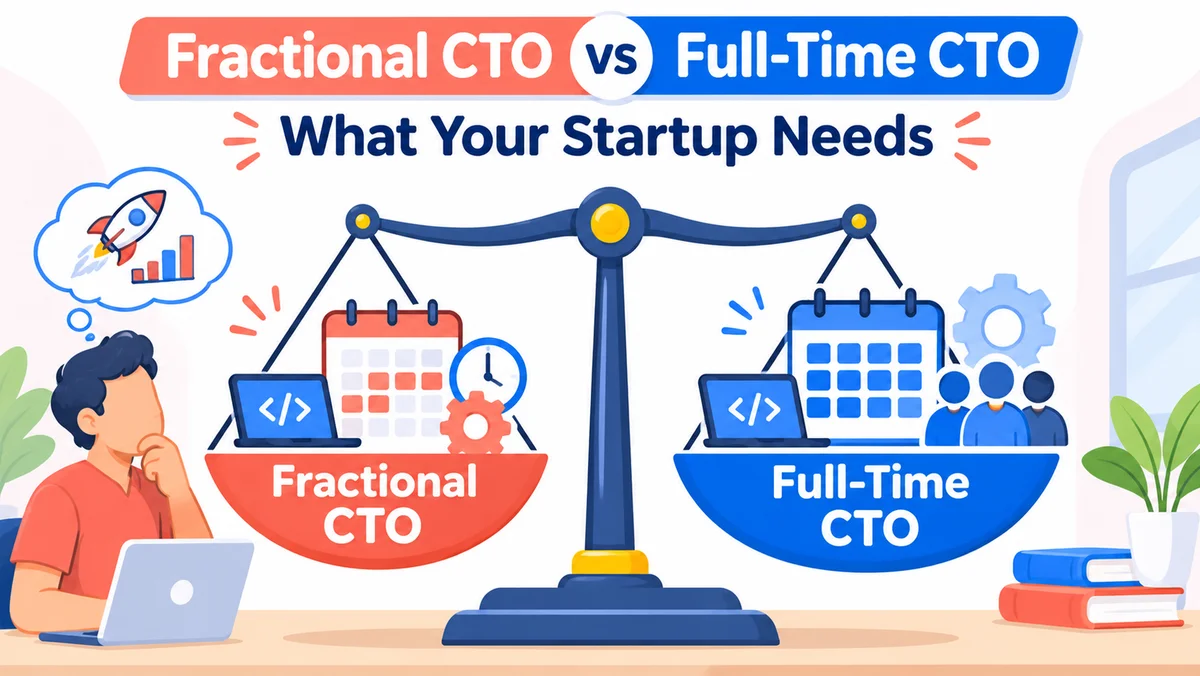
When a fractional CTO is the right choice
A fractional CTO usually makes the most sense when your startup needs expert decisions more than full-time management. Typical situations include:
- You are a non-technical founder with a product idea and need someone to turn it into a realistic scope, budget and build plan.
- You are building an MVP and want to avoid over-engineering before you have proven demand.
- You work with an outsourced development team and need an independent expert to review their work, estimates and technical choices.
- Your developers lack senior leadership, and decisions about architecture and priorities keep stalling.
- You are preparing for investment and need your technology plan, risks and roadmap explained clearly.
- You need a one-off decision, such as choosing a stack, planning a migration or assessing whether to rebuild software.
In each case, the business gets senior judgement at the moments that matter, without paying for full-time leadership it cannot yet use.
When you need a full-time CTO
A fractional arrangement starts to strain when technology decisions become constant rather than occasional. Signs it is time to hire full-time include:
- Your engineering team has grown large enough to need daily leadership, hiring and performance management.
- Technology is your core competitive advantage, and product decisions happen every day.
- Customers, partners or investors expect a permanent technology leader on the leadership team.
- Problems wait for your fractional CTO’s next scheduled hours, and those delays now cost you more than a full-time salary would.
Reaching this point is a good sign: it usually means the product has traction. It does not mean the fractional phase was wasted. Done well, it leaves you with documented systems and a clearer brief for the person you hire.
The cost question, without guesswork
It is tempting to compare a fractional fee directly with a full-time salary, but that misses most of the picture. A full-time hire also brings recruitment time, benefits, equity and the cost of a wrong hire. A fractional engagement costs less overall in most early-stage cases, but only if the scope is clear. Paying for hours that produce meetings rather than decisions is poor value at any rate.
A better question is what each option protects you from. Senior technology judgement often pays for itself by preventing a costly rebuild, a poor vendor choice or months spent on the wrong features. Our guide to custom software development cost in India explains how these decisions shape a project’s budget.
How to choose a fractional CTO
The right person matters more than the model. When you speak to candidates, look for:
- Relevant experience. Ask about products similar to yours in stage, scale or industry, and what they would do differently now.
- Clear communication. They should explain technical trade-offs in plain language that founders and investors can act on.
- Independence. If they also sell development services, ask how they keep advice separate from selling more work.
- A defined scope. Agree on outcomes, hours, availability and how urgent issues are handled.
- Documentation habits. Decisions, architecture and credentials should be written down and owned by your company, not kept in one person’s head.
- A handover plan. A good fractional CTO helps you hire their eventual replacement and transfers knowledge cleanly.
Moving from fractional to full-time
Many startups use both models in sequence. A fractional CTO shapes the early product, sets up sound engineering practices and helps build the first team. When the company outgrows that arrangement, the same person can write the job description, interview candidates and stay on for a short overlap so the new CTO inherits a well-documented system. Planning for this from the start makes the switch smooth rather than disruptive.
Key takeaways
- A fractional CTO gives you senior technology judgement part-time; a full-time CTO gives you daily leadership and long-term ownership.
- Early-stage and non-technical founders usually get more value from fractional leadership first.
- Hire full-time when technology decisions become constant and delays start to cost more than a salary.
- Compare the risks each option prevents, not just fees against salaries.
- Insist on documentation and a handover plan so knowledge stays with your company.
Frequently asked questions
Is a fractional CTO the same as a virtual CTO?
Mostly, yes. Both describe senior technology leadership provided part-time or on a defined engagement rather than as a permanent employee. “Virtual” often suggests the work happens remotely, while “fractional” emphasises the share of time involved. In practice, the scope, availability and responsibilities you agree on matter far more than the title used.
Can a fractional CTO write code?
Some do, but that is rarely the best use of their time. Their value lies in decisions about architecture, priorities, vendors and hiring, which affect everything the developers build. If you need hands-on coding as well, it is usually better to pair fractional leadership with a development team, so senior hours go towards direction rather than daily tasks.
How many hours does a fractional CTO usually work?
It depends entirely on your stage and needs. Some startups need a few hours a month for advice and reviews, while others need regular weekly involvement during an intense build. A good arrangement starts with a clear scope and adjusts over time, rising during major decisions or launches and reducing when the product is stable.
Should a startup’s first CTO be a co-founder?
It can be ideal if the right person is available, because a technical co-founder shares the risk and commitment. But forcing a co-founder decision too early can be costly if the fit is wrong. Many founders use a fractional CTO to validate the product and clarify what kind of technical partner they actually need before offering equity.
What should a startup own when working with a fractional CTO?
Your company should own everything: source code repositories, cloud and hosting accounts, domains, credentials, architecture documents and decision records. A fractional CTO should work inside your accounts rather than their own. This protects the business if the engagement ends and makes any future handover to a full-time CTO far simpler.
Choosing the right technology leadership for your stage
The fractional CTO vs full-time CTO decision is not permanent. Match the model to where your startup is today: fractional leadership while you validate the product and shape the team, full-time leadership once technology decisions become daily work. Whichever you choose, keep decisions documented and owned by the company, so the next stage starts from a strong position.
Talk to BlinkWorx
If you need senior technology guidance without hiring a full-time CTO, explore our virtual CTO services or book a free consultation. You can also contact our team or message us on WhatsApp.