
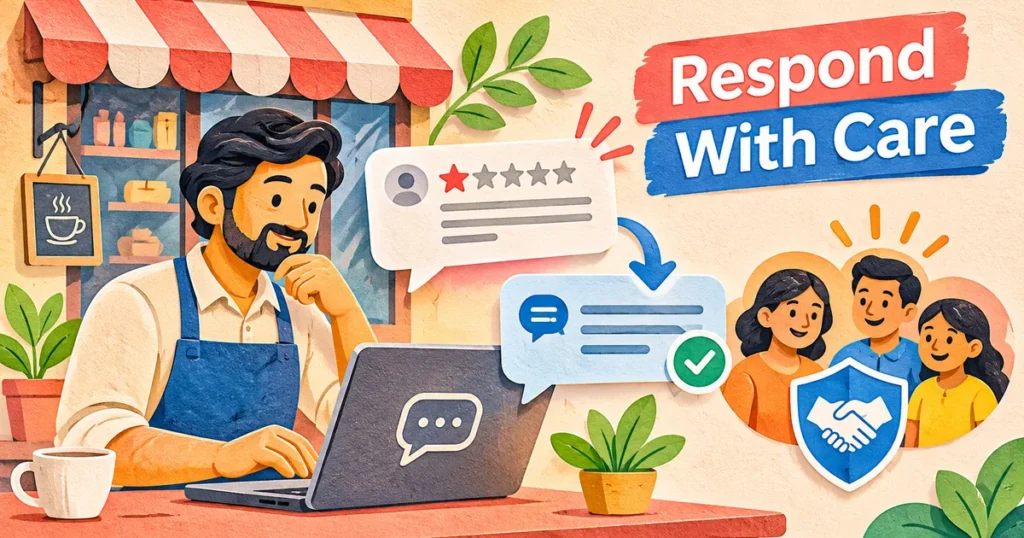
To respond to negative Google reviews, acknowledge the concern calmly, check what happened, apologise when appropriate, explain a useful next step and invite a private conversation if personal details are involved. A short, specific public reply can reassure future customers even when the original reviewer never responds. For local businesses in India, the goal is not to win an argument or hide every low rating. It is to show that your business listens, treats customers fairly and follows through.
Why your reply matters beyond one unhappy customer
A negative review is usually read by more people than the customer who wrote it. Someone choosing between a neighbourhood salon, clinic, restaurant, repair shop or coaching centre may scan low ratings to understand what happens when something goes wrong. A defensive reply suggests difficult service. A thoughtful response suggests the business is reachable and willing to address concerns.
Google Business Profile replies are public and appear with the review. Google also notifies the reviewer when a business replies. This means the wording deserves the same care as a message from your front desk or customer service team. It does not mean every complaint must receive a long explanation, nor that a reply will automatically improve search rankings.
Treat the reply as a public customer-service record. Keep the tone respectful, avoid sharing any private transaction or patient information, and never invent an investigation or refund you have not completed. The best response is accurate, proportionate and easy to understand.
A reliable method to respond to negative Google reviews
Read carefully, then verify the complaint
Before typing, identify the actual issue. Was the reviewer unhappy with waiting time, a delayed delivery, confusing pricing, rude communication or the quality of work? Check relevant booking, order or service records privately. If you cannot match a reviewer to a transaction, that is not proof the review is fake. They may use a different display name or may be describing an experience you cannot easily trace.
Acknowledge, clarify and offer a next step
Start by recognising the experience without debating the star rating. If your business made an error, say so plainly. If details remain unclear, invite the customer to contact a monitored channel. A suitable message might be: “We are sorry your visit did not meet expectations. We would like to understand the delay and address it. Please contact our team through the number listed on our profile.”
Move sensitive details out of public view
Never publish an order ID, medical detail, child’s information, phone number or private conversation to prove your side. A restaurant can discuss general service standards publicly; a clinic should not confirm whether the reviewer is a patient. Use a phone call or private email for facts that belong only to the customer and business.
After the conversation, follow through. A polite reply without any operational change will not solve recurring complaints. Briefly update your internal service notes so staff understand what to do differently next time.
Ready-to-adapt replies for common negative reviews
Use these examples as starting points, not identical copy pasted under every complaint. Replace general language with the specific issue you have actually checked. Do not claim that a resolution has been completed unless it has.
Poor customer service
“Thank you for sharing this. We are sorry our communication felt unhelpful. That is not the experience we want visitors to have. Please contact our team through the details on this profile so we can understand what happened and respond properly.”
Long waiting time
“We understand how frustrating an unexpected wait can be. We are sorry your visit took longer than expected. Your feedback helps us examine our scheduling and queue communication. Please reach out if you would like us to discuss your visit directly.”
Price or billing disagreement
“We are sorry the charges were unclear. We aim to explain prices before confirming a service. Please contact our billing team privately with the relevant details so we can check the invoice and provide an accurate explanation.”
Product or service quality concern
“We appreciate you raising this concern and are sorry the outcome did not meet your expectations. We would like to review the work and understand what went wrong. Please contact our team using the details shown on our business profile.”
Review with no explanation
“We are sorry to see that your experience was disappointing. We would welcome a chance to learn more and see whether there is something we can address. You can reach us through the contact details on our profile.”
A complaint you cannot verify
“We take feedback seriously but cannot identify the visit from the information available here. We do not want to make assumptions. Please contact us privately with a few details so we can investigate and respond accurately.”
What to avoid when handling angry or unfair reviews
The strongest mistake is answering in anger. Accusing a customer of lying, mocking their grammar or telling them to remove a review can become more damaging than the original comment. Even when the facts favour your business, the public reply should remain calm. State a verifiable limitation when necessary and keep the conversation open.
Avoid generic replies that sound automated, such as repeated paragraphs promising to “value feedback” without addressing the issue. Also avoid public compensation offers designed to secure a better rating. Google prohibits incentives given in exchange for posting, changing or removing reviews. A genuine remedy for a service failure is different from paying for a review edit, but you should never make a benefit conditional on changing a rating.
Do not post fabricated positive reviews, ask staff to pose as customers or request only happy customers to share feedback while discouraging others. These tactics can breach Google’s policies and undermine trust. Invite genuine feedback through your normal customer process without pressure.
When a negative Google review can be reported
An ordinary negative opinion is not automatically removable. Google says reports are intended for reviews that violate its policies, including certain spam, fake engagement, harassment or prohibited content. A reviewer saying the service was slow is not a policy breach merely because the business disagrees.
If you have a credible policy concern, open your verified Google Business Profile, choose Read reviews, select the report option beside the review and provide the appropriate reason. Google evaluates the report; removal is not guaranteed. You can also use its Reviews Management Tool to check status and, where eligible, submit an appeal after a decision.
Keep internal records that explain why you believe a review breaches policy, but avoid sharing private customer details in your public reply. Be particularly careful with reviews involving alleged fraud, threats or a demand for payment in exchange for removal. Preserve evidence and use Google’s appropriate reporting route rather than negotiating publicly.
For the latest steps and eligibility rules, consult Google’s official review reporting guidance
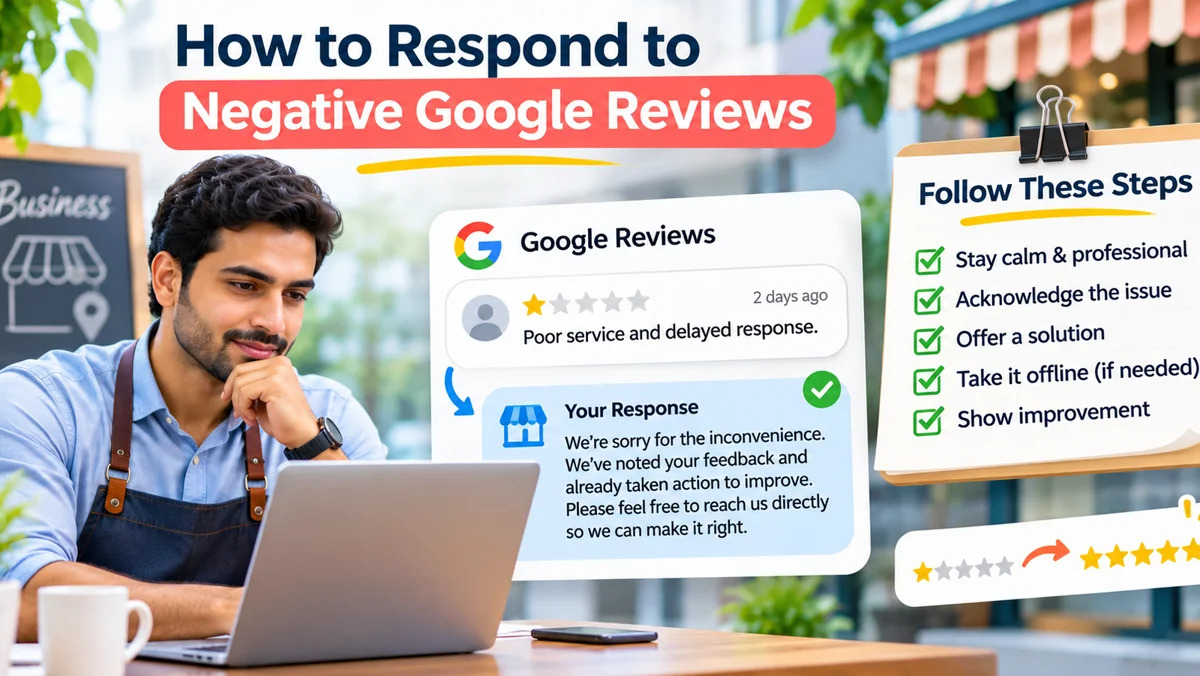
Build a simple response workflow for your local business
Review management works better as an everyday service habit than as a crisis task. Check new reviews regularly through the verified Business Profile. Give the person handling replies enough context to recognise service issues, and arrange a way to escalate billing, safety or serious complaints to the appropriate manager. A small shop may need a simple shared log; a larger multi-location brand may need separate records for each branch.
Keep the public reply and internal follow-up separate. The public message addresses the experience without exposing records. Internally, record the issue category, whether contact was attempted, any agreed next step and whether the complaint is closed. Be careful with access permissions and retention of personal data.
A practical checklist before you press Reply
- Have we identified the specific customer concern rather than arguing about the rating?
- Have we checked available facts without treating a missing record as proof of dishonesty?
- Does the response sound respectful and human, not copied from a stock template?
- Have we avoided names, account details, medical information and other private facts?
- Have we offered a realistic action or a monitored contact channel?
- Are any apology, refund or improvement claims factually accurate?
- If reporting a review, have we identified a genuine policy reason?
- Have we assigned the follow-up internally so the customer is not ignored?
Measure reputation improvement without chasing perfect ratings
A high star average alone cannot tell you whether customer problems are being solved. Look at the themes appearing in recent reviews, how often legitimate complaints receive a helpful reply, whether customers can reach the right team, and whether avoidable problems recur. Monitor trends over a meaningful period rather than overreacting to one unusually harsh comment.
Your review response strategy should work alongside accurate opening hours, updated contact details, relevant business photos and a website that clearly explains what you offer. For a broader plan linking reputation, local visibility and customer enquiries, explore BlinkWorx’s digital marketing services for businesses
Key takeaways for managing negative reviews
- Respond to the complaint, not the star count; keep the tone calm and specific.
- Verify facts before making promises, and protect customer privacy in public replies.
- Offer a workable next step and complete the follow-up outside the review thread.
- Report only suspected policy violations; disagreement is not grounds for removal.
- Never buy reviews or reward customers for editing or deleting a rating.
- Use repeated complaints to improve actual service, not just online wording.
Frequently asked questions about Google review replies
Should I respond to every negative Google review?
Most specific, genuine complaints deserve a considered response, especially when a customer describes a problem other readers may worry about. You do not need a lengthy message for every rating. Prioritise useful, factual replies and avoid repeating generic sentences. Review the situation before responding, particularly when privacy or legal issues are involved.
Can a business delete a negative Google review?
A business cannot simply delete a customer’s review because the rating is low. It can report content that appears to violate Google’s review policies. Google evaluates reports and may remove content that breaches those rules. Ordinary criticism, even when frustrating or disputed, is not itself a valid reason for removal.
What should I say when a negative review is inaccurate?
Avoid calling the reviewer dishonest in public. State only information you can verify, without exposing private records. You can say that you cannot identify the visit from the details provided and invite direct contact. If the content appears to be fake engagement or another policy violation, consider reporting it separately.
Is it acceptable to offer a discount after a bad review?
You may address a genuine service issue through your usual customer-care process, but do not offer discounts or other benefits in exchange for a customer changing or removing a review. Google prohibits incentivised review manipulation. Focus on a fair remedy for the original experience, independent of what the customer decides to publish.
Can replying to reviews improve local SEO?
A helpful response supports customer confidence and shows that your business is engaged, but no specific ranking increase can be guaranteed from replying. Google recommends managing reviews as part of a trustworthy Business Profile. Combine thoughtful responses with accurate profile information, genuine customer feedback and consistent service rather than chasing a ranking formula.
Turn a difficult review into a better customer experience
Learning how to respond to negative Google reviews is a customer-service skill as much as a marketing task. A calm acknowledgement, a truthful explanation and a useful next step can protect trust without pretending every complaint is wrong. For Indian local businesses, the most credible online reputation comes from resolving real problems and inviting genuine feedback.
If your business needs a joined-up plan for review handling, local search visibility and lead generation, explore BlinkWorx’s digital marketing services for local businesses
You can also contact BlinkWorx for a marketing discussion
or message the team on WhatsApp
to discuss a practical approach for your business.
Official reference: Google Business Profile guidance on replying to reviews