
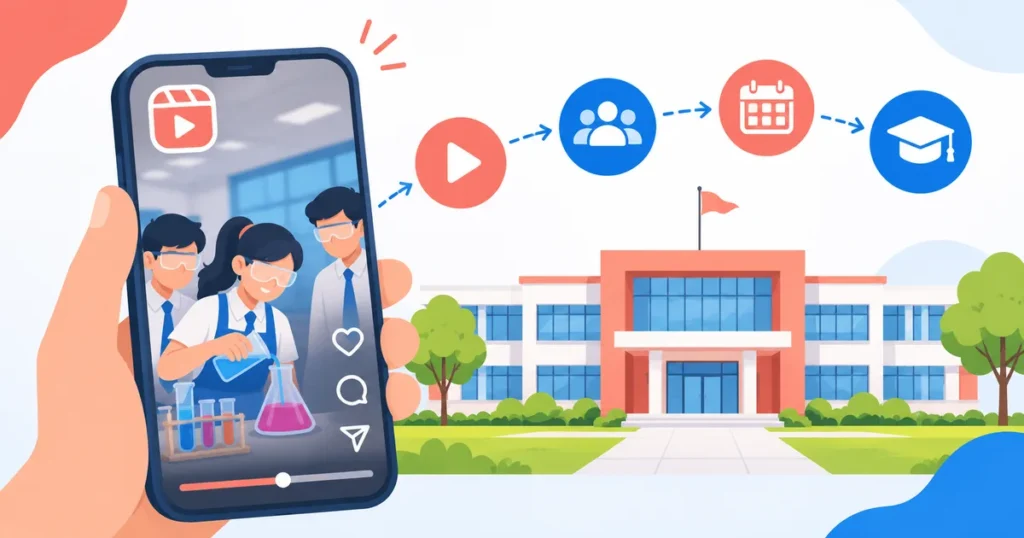
Instagram Reels for schools can help increase admissions by showing parents what learning and school life actually look like, then guiding interested families towards a clear enquiry or campus-visit step. The most useful Reels answer real parent questions, highlight genuine classroom experiences and make it easy to contact the admissions team. Views alone are not admissions. A school needs a repeatable content plan, permission-led filming, a clear call to action and prompt follow-up to turn attention into meaningful enquiries.
For principals, school owners and admissions teams in India, the aim is not to become a viral entertainment account. It is to help local families understand the school, build confidence and decide whether to start a conversation.
Why Instagram Reels for Schools Can Support Admissions
A prospectus explains facilities and programmes. A short video can show a teacher guiding an activity, a student explaining a project or the atmosphere during a school event. Those everyday details help parents imagine the experience behind a brochure or website.
Reels may also be discovered by people who do not follow the school account. That makes them a useful awareness channel, but not a substitute for search visibility, a helpful admissions page or a personal school visit. The wider digital presence should tell the same accurate story.
Think in terms of parent decisions, not viral views
Parents usually want answers about teaching, safety, communication, transport, extracurricular opportunities and the admissions process. Content should connect those questions to visible evidence. A short classroom demonstration can explain an approach better than a montage with a generic slogan.
Plan each Reel around one question and one next action. For example, a video showing an activity-based lesson can invite parents to explore the curriculum page, while a school tour can invite them to request a visit.
Start With the Parents You Want to Reach
Before filming, define the school’s realistic catchment area and the age groups or classes with available admissions. A parent looking for nursery admission needs different information from a parent considering a move into secondary school. One account can address both, but individual videos should not try to answer everything at once.
Build a simple parent-question bank
Ask the admissions desk which questions recur during calls and school visits. Add questions from teachers, transport coordinators and school leadership. Group them by everyday learning, care and safety, facilities, student development and practical admission steps.
Keep location visible in appropriate ways: the school’s locality in captions, a clear account bio and a contact page with the correct address. Use accurate descriptions of facilities and programmes rather than broad phrases such as “best school” or unsupported outcome claims.
Use real parent questions to plan topics, and verify claims before publishing.
Seven Instagram Reel Ideas That Build Parent Trust
A useful school Instagram marketing plan balances school culture with specific information. The examples below can be recorded with a smartphone and straightforward editing, provided filming permissions and school safeguarding rules are in place.
| Reel format | What it shows parents | Suggested action |
|---|---|---|
| A day in a classroom | How lessons involve students | Explore the learning approach |
| Teacher explains a concept | What classroom teaching looks like | Ask a curriculum question |
| Science or maker project | Learning through practical work | See academic activities |
| Guided campus walk | What facilities are available | Book a campus visit |
| Sports, music or art session | How students develop interests | Explore co-curricular options |
| Admissions desk explains steps | How to apply and what to prepare | View admission details |
| Safety and daily routines | How the school handles everyday care | Contact the school team |
Rotate these formats instead of posting only celebration videos or admission posters. Capture a short beginning, middle and end: the question, the experience and what the viewer can do next. Record natural sound when appropriate and add readable captions for people watching without audio.
Make ordinary school experiences the main story
A lab demonstration, art activity or student-led exhibition can show something distinctive without overstating its importance. Explain what children were learning, what support teachers provided and how the activity connects with the school’s broader programme.
For videos involving students, permission is not a one-time assumption. Check the school’s current parent or guardian consent process, limit personal details, and never reveal student records, identifiable timetables or private information. If consent is uncertain, use staff demonstrations, hands-only activity shots or illustrated scenes.
Create Reels That People Can Understand and Act On
Start with a clear opening that immediately shows the topic: “What happens in our science lab?” or “How does the campus visit work?” Then show two or three relevant clips, a short explanation and one next step. The strongest hook is often a genuinely useful question, not an exaggerated promise.
A practical Reel production checklist
- Choose one parent question and a single purpose for the video.
- Confirm filming permission, child-safety rules and what must stay off-camera.
- Film vertically with stable framing, good lighting and understandable audio.
- Add concise on-screen captions and check spelling, names and accessibility.
- Write a factual caption with locality and useful details when relevant.
- Use one clear action such as “Book a campus visit” or “Ask about admissions”.
- Review the draft with an authorised staff member before posting.
Example: a 30-second science lab Reel
Here is how the checklist turns into a single Reel, shot by shot.
- 0 to 3 seconds: on-screen text asking “What happens in our Class 8 science lab?” over a close-up of a beaker being poured.
- 3 to 12 seconds: a wide shot of students working, filmed from behind or hands-only if consent is not in place.
- 12 to 22 seconds: the teacher explains, in one sentence, what students are learning and why it is done hands-on.
- 22 to 27 seconds: the finished result or an observation sheet, with no names visible.
- 27 to 30 seconds: an end card reading “Book a campus visit”, with the admissions number or link in bio.
The caption adds one line about the activity, the school’s locality and the same call to action.
For school admission Reels, direct a parent to the relevant page or contact route instead of sending them through several unrelated links. Keep the enquiry process mobile-friendly. If a school uses WhatsApp, make clear which number is official and how the admissions team will respond.
Use music and images that the school has rights to publish. Avoid reposting copyrighted material or relying on trending audio that could distract from the message. Consistent, original, informative clips are a more sustainable foundation than copying another school’s format.
Turn Reel Interest Into Admissions Enquiries
A Reel is the start of a journey, not its final step. A parent may watch, inspect the profile, visit the website, compare options and return later. Each stage should offer a helpful response, with no pressure and no unnecessary data collection.
Connect the profile, enquiry form and admissions desk
Check that the Instagram bio identifies the school and location, the admissions link works on a phone, and the page explains the next steps clearly. Make enquiry forms short and request only information needed for an initial response. Provide a phone or WhatsApp alternative for parents who prefer conversation.
When a lead arrives, record which Reel or campaign prompted the enquiry where technically possible and appropriate under the school’s privacy practices. A timely, helpful reply matters more than an elaborate automated message. Staff should be prepared to answer questions that the Reel raises.
If the school wants a coordinated approach across Instagram, Google, its website and enquiry handling, BlinkWorx offers school digital marketing and social media services., so parents find the same accurate admissions information wherever they look.
Use a simple enquiry journey
- A parent discovers a Reel addressing a relevant school question.
- The profile or caption directs them to an accurate admissions information page.
- They request a callback, admission details or a campus visit.
- The admissions team follows up and answers practical questions.
- The school reviews qualified enquiries and completed visits, not only views.
Plan a Manageable Posting Calendar
A school does not need to film every day. Start with a manageable schedule that the teaching and admissions teams can support without disrupting classes. Two or three Reels a week is a practical starting point. Adjust once you can see which topics bring enquiries.
Group filming by theme. During one approved classroom visit, capture enough relevant footage for an activity Reel, a teacher explanation and a brief facilities overview. Maintain a shared content calendar showing the topic, owner, approval status, publication date and intended next action.
A balanced content mix
Alternate evidence of everyday learning with practical admissions information. Events and achievements can appear alongside explanations of how the school teaches and supports students.
Review comments and messages with a defined staff owner. Answer general questions publicly when appropriate, but take personal admissions details into a private, official channel. Do not publish student information or identify families in public replies.
Measure What Matters and Improve Each Month
Instagram Insights can help the team understand reach, watch activity, shares and profile actions, but these are early signals. Admissions teams should connect content activity to actual enquiries, visits and applications wherever they have reliable records and the necessary privacy controls.
Use a simple monthly review
Compare which questions brought useful conversations, not just the highest play count. Record enquiries attributed to Instagram, how many resulted in a scheduled visit, and what questions families asked next. Attribution will be imperfect, especially when parents discover the school on multiple channels.
Watch for repeated friction: broken profile links, slow replies, confusing admission dates or a Reel promising details that the website does not explain. Fixing those issues may improve the experience more than publishing more videos. Use results to choose next month’s topics rather than chasing views for their own sake.
Instagram’s own professional-dashboard Best Practices area provides current platform guidance on creation, reach and engagement. Review it periodically because recommendations and available features can change.
Frequently Asked Questions
Do Instagram Reels actually help schools get admissions?
They can support admissions by helping local parents discover a school, understand its learning environment and find a clear enquiry route. Results depend on audience fit, content quality, school reputation and follow-up. Measure useful enquiries and campus visits alongside video engagement. Reels alone cannot guarantee applications or enrolments.
What should schools post on Instagram Reels?
Start with classroom activities, teacher explanations, campus tours, co-curricular projects and answers to common admissions questions. Use authentic footage that the school is permitted to share. Each Reel should focus on one useful topic and provide a sensible next step, such as viewing admission information or arranging a visit.
How often should a school post Instagram Reels?
There is no single posting frequency that suits every school. A practical trial might start with two or three well-planned Reels each week, depending on staffing and available footage. Review which topics generate meaningful parent conversations, then adjust the schedule. Consistency and accuracy matter more than an arbitrary daily target.
Can schools make Reels without showing students’ faces?
Yes. Schools can film teacher demonstrations, learning materials, hands-only project activities, empty facilities, diagrams and staff-led explanations. These formats can communicate useful information without identifiable student faces. Always follow applicable school policies, obtain relevant permissions and avoid displaying names, grades, records or other sensitive student details.
Should schools boost their Instagram Reels with paid ads?
Paid promotion can be considered after the school has a clear audience, helpful creative, an accurate admissions landing page and a process for handling enquiries. Start with a controlled test budget chosen by the school rather than assuming a universal amount. Review enquiry quality and compliance with platform policies before increasing spending.
Key Takeaways
- Answer a real parent question in every Reel and show genuine school experiences.
- Use permission-led filming and protect students’ identities and personal information.
- Connect each Reel to a simple admissions enquiry or campus-visit route.
- Measure qualified enquiries and visits alongside reach and engagement.
- Improve the full parent journey, not just the video itself.
Make Instagram Reels for Schools Part of a Better Admissions Journey
Instagram Reels for schools work best when useful videos, accurate admissions information and responsive staff reinforce one another. Start with a few parent questions, film authentic answers, and make the next step obvious. Then build on what families find genuinely helpful.
For a free consultation about your school’s online presence and admissions marketing, contact BlinkWorx through our school digital marketing services page, contact form or WhatsApp. We can discuss your existing channels, priorities and practical next steps.